Use Z to undo moves on the documented PC keyboard layout in Order of the Sinking Star. Undo returns the puzzle through previous actions, allowing you to recover from a bad movement and test another approach. Confirm the Undo action in your current controls if you use a controller or a different input arrangement.
Undo is most useful when you inspect the restored state before replaying. Returning one step does not necessarily remove the mistake that caused a later blockage. Continue back to the point where the needed route, object position, or hero access still exists, then change the action that removed it.
Reverse the mistake you can identify
When a move produces an unwanted result, stop immediately. Another input can add an extra interaction and make the original change harder to isolate. Undo the movement, inspect the returned board, and compare the character and object positions with the outcome you intended.
For a pushed object, inspect the tile it left and the sides from which it can still be reached. For a pulled object, inspect the route behind the Thief. For a Wizard exchange, inspect both positions: the Wizard's target tile and the tile now occupied by the object. The correct recovery depends on which relationship changed.
Do not judge the restored state only by the active character's location. Other heroes and objects can have been affected by the action. In a multi-character puzzle, the useful state is the one that still permits the next required interaction. Returning the character to an earlier tile without checking the shared arrangement can lead you to replay the same failure.
Use one-step undo when the error is local and obvious. It preserves more of the setup than a full restart and makes it easier to compare the two possible outcomes of a single action.
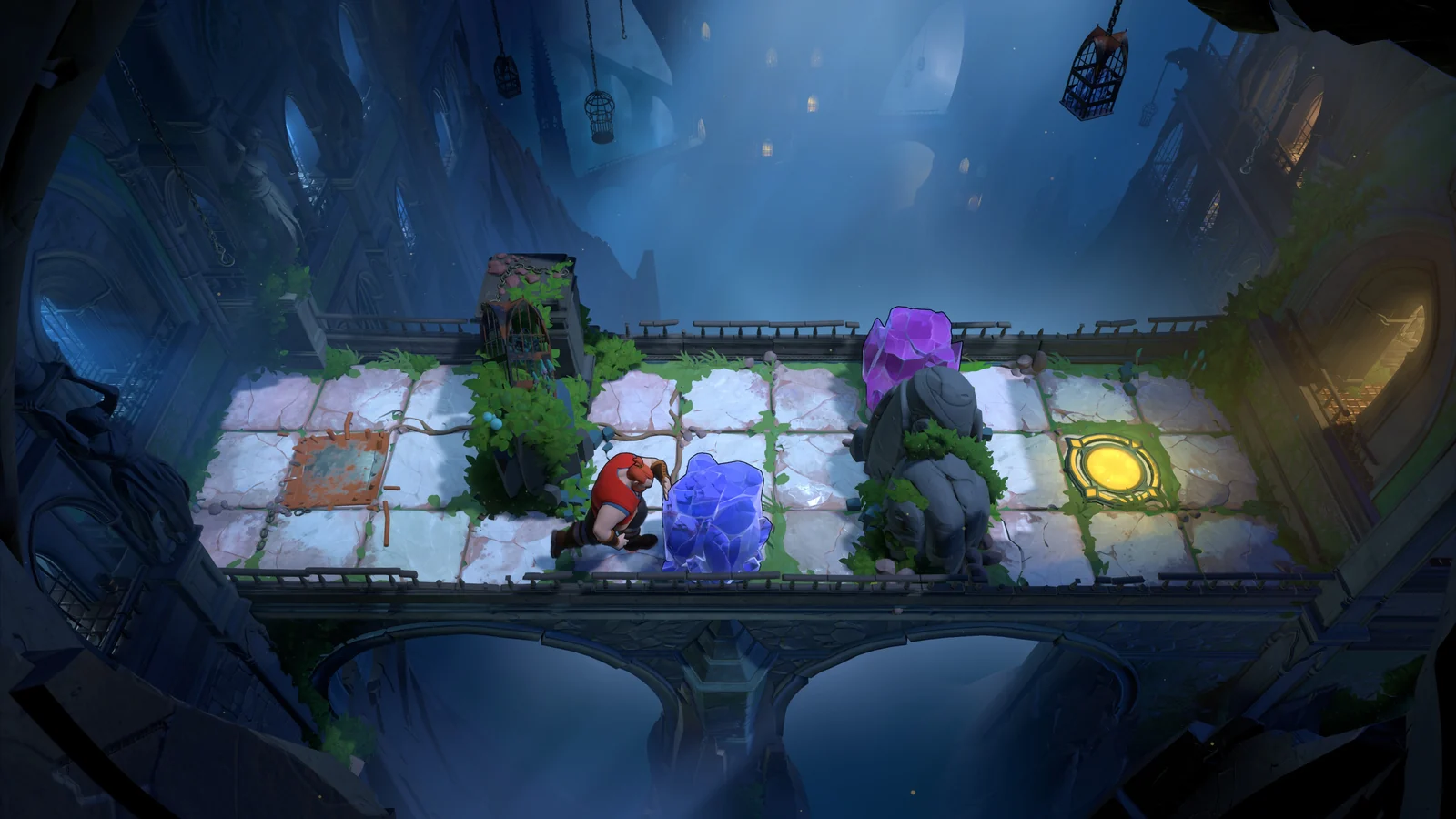
Inspect the available sides of each object after undoing a move.
Find the earlier move behind a later deadlock
A puzzle can become impossible to continue several moves after the underlying mistake. For example, a block may be placed correctly for the current hero while the next hero loses access to its required side. You notice the problem only when control changes.
In that situation, undoing the last movement alone may not help. Look for the point at which the essential access became unavailable. Step backward until the relevant tile or route is open again. Then revise the ordering: let the other hero pass first, move an obstruction before the block, or preserve the useful starting position for an exchange.
Name the missing condition before rewinding. Saying that the room feels stuck is difficult to act on. Saying that the Wizard can no longer reach a useful starting tile tells you what to inspect as you go backward. You are looking for the state that restores that condition.
Once you reach it, stop undoing. Additional rewinding can remove setup that was still valid. The objective is to recover a useful decision point, not automatically return to the beginning every time an experiment fails.
Use undo to test a single interaction
Undo allows a small experiment whose result can be compared clearly with its starting state. This is useful when you are uncertain about a hero's movement or the relationship between a device and an object.
- Choose one interaction you want to understand.
- Inspect the relevant character, object, and destination before acting.
- Make the single movement or action.
- Observe all positions that changed.
- Undo if the test disrupted the setup.
- Decide whether the result confirms the interaction your plan needs.
The benefit comes from controlling the test. If you move a hero, switch characters, adjust a mirror, and reflect an object before inspecting the result, the final arrangement may be difficult to explain. Separate those operations until you understand their local outcomes.
A test can answer an important question without solving the room. You might establish that a Thief departure pulls an object you need to preserve, or that a Wizard exchange deposits the target on an inconvenient tile. Use that information to plan the next attempt rather than performing the same experiment repeatedly.
Recover from movement by the wrong hero
Character selection matters because the northern heroes manipulate objects differently. The Warrior pushes, the Thief pulls, and the Wizard exchanges positions. An unintended interaction may be the correct behavior of the wrong active character.
Undo the movement before changing several other positions. Confirm the active hero, then determine who should perform the intended action. If the room provides the appropriate character, select them and inspect their route to the required position.
Be careful when you replay the same direction. A direction is not a complete instruction without the character and board state. The Warrior's push and the Wizard's exchange can produce different results from superficially similar starting arrangements. Returning to the earlier board does not make an incorrect character choice useful.
If the correct hero still cannot act, the problem is preparation rather than selection. Inspect the standing tile, the target line, or the pulling corridor they need. Undo farther only when doing so restores that missing condition. This keeps a selection error separate from an object-placement error.
Distinguish rewinding from changing time speed
The game includes separate controls for time speed. On the documented PC layout, Alt speeds up time, while Ctrl provides running with slow time. These controls affect the pace of the simulation; they are different from Undo.
Use undo after an event when you need to return to an earlier state. Use slow time when you need more time to execute or inspect a planned interaction. Use increased time speed when waiting for a moving element to return is the main delay. Choosing the wrong tool can leave you watching the same failed state at a different speed.
This distinction matters in water puzzles and other rooms involving motion. If a stone affected the wrong part of a lily-pad arrangement, rewinding can return you to a state before the event. Slowing time can then help you inspect the revised timing. It does not by itself restore the stone to its earlier position.
First determine whether the plan is spatially correct. If the object was aimed toward the wrong destination, more time to execute the same action will not fix the geometry. Once the route is correct, use the time controls for the event that actually needs timing.
Decide how much history to retrace
Use the smallest rollback that restores a useful choice. A single bad push may require one step. A sequence that gradually closes a route may require several. A long attempt in which you have lost track of the intended arrangement may be clearer to restart.
Inspect the board as you go back. Do not assume that the most recent recognizable image is the correct decision point. It may already contain the misplaced object that caused the later problem. Check the actual access or condition you need.
You can also use undo to examine the sequence that led to a promising state. If an object arrived somewhere useful but you no longer understand how, reverse a small part of the sequence and inspect the preceding arrangement. Then rebuild the relevant step deliberately. This makes the successful interaction something you can use rather than an accident you cannot reproduce.
Avoid undoing farther than necessary just because the action is available. Losing valid preparation can make the next attempt harder to compare. Stop when the missing condition is restored and the revised action has a clear purpose.
Keep leaving a room separate from restarting it
Order of the Sinking Star supports moving between its regions and returning to unfinished puzzles. That provides an alternative when you understand the controls but have no new idea to test. Leaving through the overworld is a change of task, not the same operation as Undo or restarting the board.
When you return, inspect the arrangement before making another movement. Do not assume that changing regions necessarily created a fresh starting state. A saved unfinished arrangement can still contain the blockage you left behind.
The useful habit is to leave with a concrete question about the board. Identify the missing route, the object that needs a different position, or the hero whose movement you cannot yet coordinate. Returning with that question gives undo a purpose: you can look for the decision point that permits a new test.
This page does not establish a universal undo-history rule across every exit, completed puzzle, or restarted level. Treat the history available in the current room as the state you can actually retrace. Do not plan a recovery around unverified assumptions about finishing and replaying a level.
Use a combined puzzle to inspect shared changes
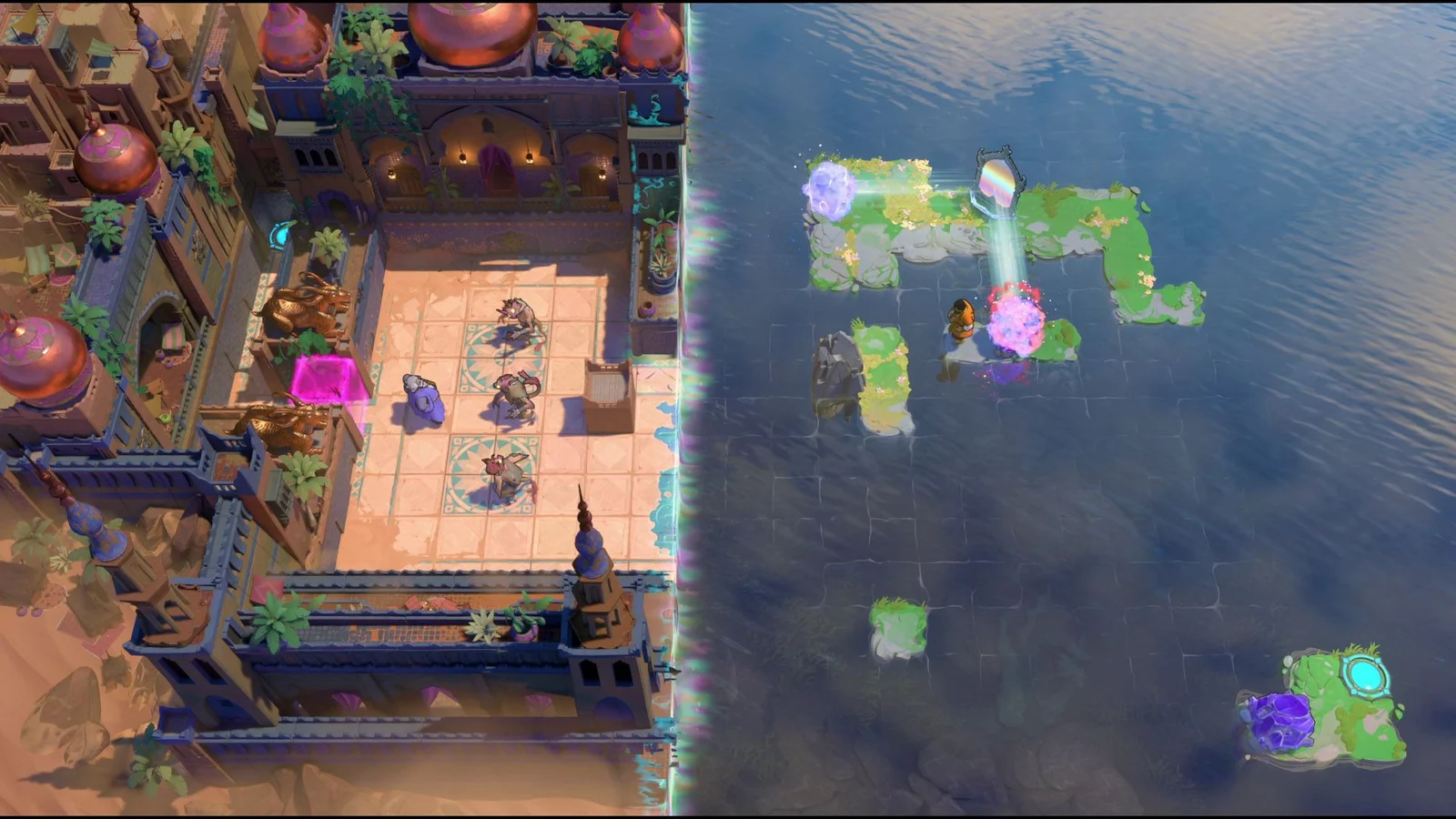
The Gold Stage in Heroes and Water Part 1 is an example in which the Trader's mirror preparation and the Wizard's exchanges share the same board. Rewinding a failed handoff is useful because either character's earlier action can affect the other's next move.
The Trader prepares the stone and mirror route. The Wizard then arranges monsters for a reflection that removes the obstacle. Later, an exchange between the Wizard and Trader makes the Trader's exit accessible, and a rock provides another exchange for the Wizard's own route.
If the Trader's preparation is incomplete, undoing only the Wizard's last movement may leave the same missing access. If the monster arrangement is wrong, undoing the entire opening may discard a valid route. Identify which handoff failed and return to the state immediately before that relationship changed.
The example does not provide a universal rewind count. Its value is the separation of tasks: preparation, manipulation, and final access. Locate the failed task on your matching board, then preserve the completed preparation that still serves it.
Choose the next action from the restored board
Before continuing after undo, verify the current state as if it were a new decision point. Check the active hero, the important object positions, the route needed for the next interaction, and any visible device involved in the plan.
Then choose one change to the previous attempt. You might move a companion before the block, preserve a pulling route, or place the Wizard on a more useful tile before an exchange. Changing one meaningful part makes the result easier to evaluate.
If the revised action restores the missing access, continue to the next dependency and inspect it in turn. If it fails, undo and update the specific condition you were testing. The goal is to turn an unexplained deadlock into an understood sequence of movements. Undo supplies the earlier states; inspecting those states tells you what to do differently.